
Looking back at 2024, the CMS (Content Management System) market continued to solidify its role as the backbone of the internet. These platforms empowered users—both technical and non-technical—to build and manage websites with ease, fueling the growth of millions of sites worldwide. From WordPress leading the charge to Shopify and Wix carving out their niches, the CMS landscape remained dynamic and innovative throughout the year.
So, how did the CMS platforms perform in 2024, and what trends shaped the future of website management? Let’s take a closer look.
CMS Platforms Dominating the Market in 2024
With over 78 million website live on the internet, CMS platforms power most of them. But which systems lead the charge?
WordPress – The Undisputed King
- Market Share: 62.7% of CMS-powered websites, 43.3% of all websites.
- Why It Leads: Open-source, highly customizable, and backed by a massive community, WordPress is a favorite for everyone—from bloggers to Fortune 500 companies. With 58,000+ plugins and countless themes, it’s a one-size-fits-all solution.
- Notable Users: TechCrunch, TIME, and Microsoft News.
Shopify – eCommerce Powerhouse
- Market Share: 6.4% of CMS platforms.
- Specialty: Purpose-built for online stores, Shopify offers tools like inventory management, payment integration, and product customization. It’s a top choice for entrepreneurs launching eCommerce websites.
- Notable Growth: Dominates the eCommerce CMS market with 26% market share, beating out WooCommerce.
Wix – Simplicity at Its Core
- Market Share: 3.9%.
- Who It’s For: Beginners who need a website fast. With drag-and-drop design, hosting included, and templates galore, Wix is ideal for personal blogs, small businesses, and artists.
Squarespace – Sleek and Stylish
- Market Share: 3.0%.
- What Stands Out: Known for its beautiful templates and professional designs, Squarespace targets creatives and small business owners who want websites that look high-end without hiring a designer.
Joomla – The Veteran
- Market Share: 2.4%.
- Niche Appeal: Joomla offers flexibility and power but lacks the ease of use and community support of WordPress. It remains a solid choice for developers comfortable with technical intricacies.
Key Trends in the CMS Market

The Rise of eCommerce-Focused Platforms
ECommerce websites are booming, and platforms like Shopify, WooCommerce, and Wix Stores are leading the charge. Shopify’s meteoric rise shows the growing demand for dedicated eCommerce solutions.
Decline of Older Players
Joomla and Drupal, once major CMS players, are losing ground. Their combined market share has fallen below 5% as WordPress continues to dominate the open-source space.
All-in-One Website Builders Gaining Momentum
Platforms like Wix and Squarespace cater to users seeking simplicity, with pre-built templates and easy hosting integration. These systems are becoming increasingly popular with non-technical users, though their lack of scalability limits their long-term appeal.
Growing Popularity of No-Code Solutions
The rise of no-code tools is empowering users to build websites without writing a single line of code. Platforms like WordPress are adapting, offering visual builders like Elementor and Divi to stay relevant.
Why WordPress Stays on Top
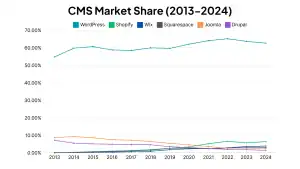
WordPress remains unrivaled due to its unique combination of features:
- Flexibility: Whether you need a blog, an eCommerce site, or a custom solution, WordPress delivers.
- Community: Millions of developers and contributors ensure constant updates and improvements.
- Cost-Effectiveness: Free to use, with affordable hosting options and thousands of free plugins and themes.
With its ever-growing ecosystem, WordPress shows no signs of slowing down, cementing its place as the CMS of choice for the foreseeable future
eCommerce Market Share: A Separate Battlefield
When it comes to online stores, the competition is much closer. Here’s how the eCommerce CMS market stacks up:

- Shopify: 26%.
- WooCommerce: 19%.
- Wix Stores: 16%.
- Squarespace: 11%.
While Shopify dominates, WooCommerce—powered by WordPress—remains a formidable competitor.
Final Thoughts
In retrospect, 2024 was a defining year for CMS platforms. WordPress retained its crown as the most dominant CMS, thanks to its unmatched flexibility and robust community support. Shopify continued to dominate the eCommerce space, while Wix and Squarespace solidified their positions as go-to options for beginners and creatives.
The year also saw the rise of no-code solutions and specialized tools, making website creation more accessible than ever. As the industry looks ahead, the innovations and trends of 2024 laid the groundwork for even more exciting developments in 2025.